Something strange is happening.
Quietly, without a revolution or a headline, the way we work, learn, and create value has shifted. People are building careers from bedrooms. Teenagers are teaching millions online. Writers are running software businesses. Designers are launching courses. Programmers are becoming philosophers in public.
It feels a bit chaotic for those that accepted and followed the "educational" system. Get a degree, a masters and then you'll succeed. But that's been proven over and over to be false.
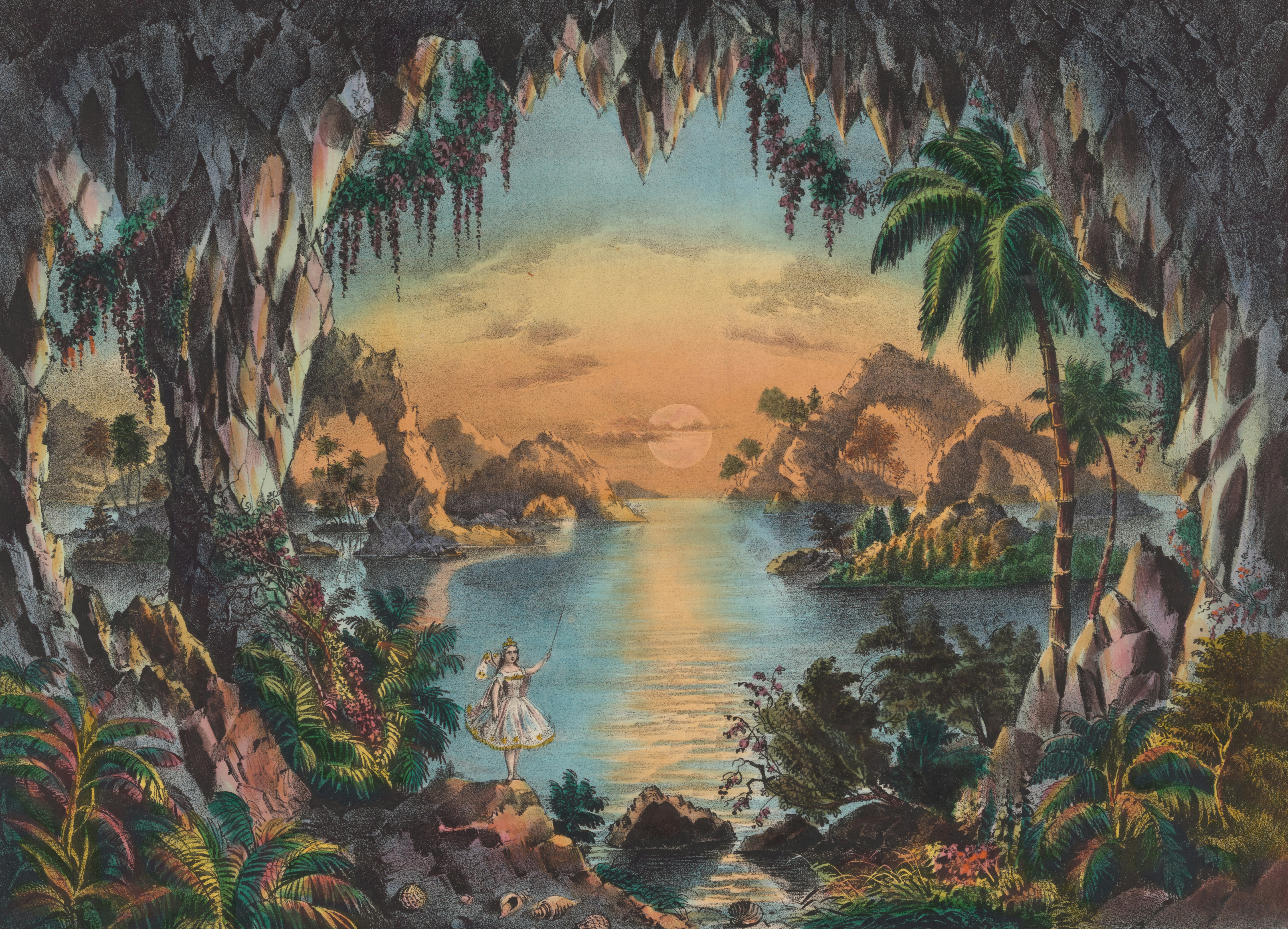
But it also feels familiar. In the 15th century, the Renaissance gave us polymaths, people like Leonardo da Vinci, who refused to stay in one lane. He painted, engineered, studied anatomy, designed machines. He was not a specialist. He was curious.
Today, something similar is unfolding.
Only now, the canvas is digital.
The rise of the creator as educator
According to Goldman Sachs, the creator economy is projected to reach nearly $500 billion by 2027. That number is staggering. But the more interesting shift isn’t economic, it’s cultural.
People are increasingly turning to creators for education.
Not just entertainment. Education.
If you want to learn:
How to code
How to invest
How to get fit
How to think clearly
How to build a business
You probably won’t start with a university syllabus.
You’ll start with YouTube. Or a newsletter. Or a creator you trust.
That alone tells you something fundamental has changed. Knowledge is no longer gatekept by institutions. It's distributed by individuals.
And individuals are building leverage in ways that were impossible twenty years ago.
The myth of the specialist
For decades, we were told to specialize.
“Pick one thing.”
“Become the best at it.”
“Stay focused.”
There is wisdom in that. Depth matters.
But the internet rewards something slightly different.
It rewards intersections.
You don't need to be the best video editor in the world.
Or the best writer.
Or the best marketer.
But if you are good at all three?
You become rare. And rarity is valuable.
The modern generalist isn’t scattered. They are layered.
They combine:
Writing + psychology
Technology + design
Business + storytelling
Health + philosophy
Each skill alone is common. Together, they form a signature.
This is what some call “skill stacking.” You don’t aim to be world-class at one thing. You aim to be strong across several complementary areas. And over time, improve each one in homeostasis (each skill compounds and adds value to the next, and viceversa).
It's less glamorous than mastery.
But often more practical.
Social media distorted our idea of value
Scroll for five minutes and you’ll think you need to be exceptional to matter.
The fastest.
The smartest.
The richest.
But that's a distortion.
In reality, you only need to be slightly ahead of someone else to help them.
If you are one step ahead, you can teach the next step.
This is why creators thrive. They don't wait to become experts in the traditional sense. They document what they are learning. They refine systems. They share what works.
The internet favors clarity and usefulness, not perfection.
And because each person’s experiences are different, the market for perspectives is far less saturated than it appears.
You can't saturate individuality and authenticity.
For most of history, income was tied directly to time. You worked an hour. You got paid for an hour.
Today, technology allows you to build once and distribute infinitely.
A video can teach millions.
A course can sell while you sleep.
A piece of software can serve thousands simultaneously.
That is leverage.
Naval Ravikant once said, “Seek wealth, not money or status. Wealth is assets that earn while you sleep.”
The second Renaissance is built on that idea. Instead of asking, “What job should I get?” the better question becomes: “What system can I build?”
That might be:
A digital product
A community
A newsletter
A brand
A body of work
An internal tool for your business
Leverage compounds. Labor exhausts and overpower us.
The power of failure stacking
There is a quiet advantage in not committing too early to a single identity.
When you experiment across domains: writing, coding, marketing, fitness, design… you gather tools.
You fail in public.
You hit roadblocks.
You learn just enough to solve them.
Then you move forward.
Each small failure becomes a skill and a lesson.
Over time, the stack becomes meaningful.
A specialist often sees the world through one lens.
A generalist sees patterns between lenses.
In an unpredictable digital environment, pattern recognition is a superpower.
Why the creator economy isn’t “saturated”
The word “saturated” gets thrown around carelessly.
But what does it mean?
It usually means: “There are many people doing something similar.”
That has always been true.
There were thousands of painters during the Renaissance.
Thousands of writers in every century.
Thousands of businesses in every industry.
Yet new voices still emerge. Because people are not buying information alone.
They are buying trust.
Clarity.
Perspective.
Resonance.
The most defensible niche today is not a topic. It is a person.
A more flexible way to think about work
The second Renaissance doesn't demand that you abandon depth.
It invites breadth.
It encourages curiosity over rigidity.
You might begin in one area, say, music (like me), and later discover design and marketing, and later discover an interest in psychology. Then metaphysics. Then writing. Suddenly, you are not just a drummer. You are someone who understands people, branding, and user behavior.
That evolution is not distraction. It is integration. It adds to your own system. (and it's very common and easy/normal for neurodivergent people).
The digital world rewards those who can synthesize.
A quiet invitation
This moment in history isn't loud.
Unfortunately, there are no marble statues or cathedral ceilings.
There are laptops.
WiFi connections.
Online communities.
But the underlying shift is starting to feel just as significant.
Individuals now have access to tools of production, distribution, and monetization that were once reserved for institutions and wealthy families.
You don't have to be the best. You just need to get started. The most important thing is to stay consistent. In other words, don't stop until you succeed on your own terms.
Stay curious.
Willing to experiment.
Willing to stack small skills over time.
The Renaissance didn't produce polymaths overnight. And you don't have to become one. It produced people who followed curiosity across boundaries.
We've always had the opportunities to follow our curiosity, but now access to them has been democratised in many parts of the world and industries, which is an advantage for most of us.
The only question is whether we recognize it.